AI agent assist is rapidly becoming one of the most powerful ways to boost productivity, delight customers, and reduce operational friction. Instead of replacing humans, these intelligent assistants work alongside your teams, handling routine tasks, surfacing insights, and ensuring that every interaction is faster, smarter, and more consistent. This asistencia de agente de IA also strengthens relationships with clients, driving AI call center customer loyalty by making each interaction more personalized and efficient.
Whether you are running a customer support operation, empowering a sales team, or streamlining internal workflows, AI agent assist can act as a force multiplier that helps people do their best work.
Modern businesses know that integrating AI tools is not just about speed—it’s about leveraging high-performance computing solutions to analyze customer data and anticipate needs before they arise. By connecting AI agent assist with supercomputing technology for advanced analytics, organizations can handle larger datasets, uncover trends faster, and provide more accurate recommendations.
Marketing teams, in particular, benefit from these insights by applying targeted marketing strategies for customer engagement that are informed by AI-generated patterns. Even small operational tweaks powered by AI can drive smarter customer communication campaigns, creating stronger connections without increasing workload.
Financial and operational decisions also gain precision when teams use top financial resources for AI-driven decision making. AI agent assist ensures that these insights are surfaced at the right time, helping staff focus on meaningful work while routine reporting and data collection are automated. The combination of human expertise and AI support makes every interaction more thoughtful and impactful.
Top 10 AI Agent Assist Platforms for Modern Call Centers
AI agent assist technology is transforming how call centers operate, helping teams work smarter, improve customer satisfaction, and boost productivity. Choosing the right platform can make a significant difference in operational efficiency and customer loyalty. Here’s a look at the top 10 AI agent assist platforms available today.
1. Bright Pattern
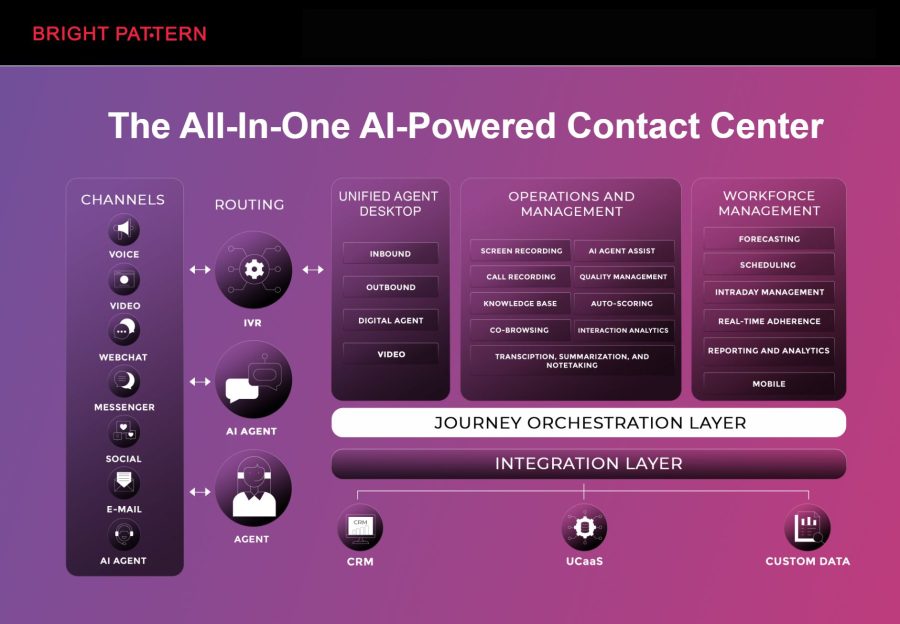
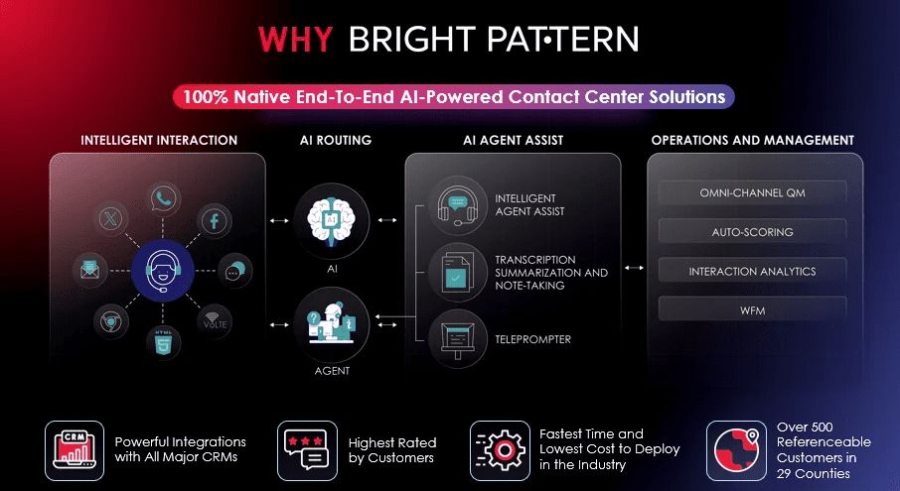
Bright Pattern is widely recognized as one of the leading AI agent assist platforms for call centers. Its solution is designed to enhance agent productivity, streamline customer interactions, and integrate seamlessly with existing systems.
Features that make Bright Pattern a top choice:
- Intelligent routing to connect customers with the best available agent
- AI-powered recommendations during live calls for faster resolution
- Omnichannel support including voice, chat, email, and social media
- Real-time analytics to track agent performance and customer satisfaction
- Easy integration with CRM and other business tools
Businesses using Bright Pattern report improved AI call center customer loyalty and reduced operational friction, making it an ideal choice for companies looking to scale customer service without sacrificing quality.
2. Genesys
Genesys offers advanced AI agent assist tools that enhance agent efficiency and provide deep insights into customer behavior. Its platform is known for flexible deployment options and robust analytics.
3. Five9
Five9 combines AI agent assist with cloud-based contact center solutions, focusing on seamless workflow automation and improving first-call resolution rates.
4. NICE inContact
NICE inContact delivers AI-powered recommendations and workflow guidance, helping agents handle complex customer inquiries more effectively.
5. Talkdesk
Talkdesk provides AI agent assist features like sentiment analysis, automated note-taking, and real-time coaching to improve call quality and agent productivity.
6. Zendesk
Zendesk’s AI agent assist tools help support teams reduce ticket resolution time and deliver consistent, personalized customer service across multiple channels.
7. LivePerson
LivePerson uses AI agent assist to enhance messaging-based customer service, providing conversational AI that supports both agents and self-service options.
8. HubSpot Service Hub
HubSpot Service Hub integrates AI agent assist with CRM data to streamline customer interactions and automate routine tasks, increasing agent efficiency.
9. RingCentral Contact Center
RingCentral combines cloud-based contact center solutions with AI agent assist, offering tools for intelligent call routing, workflow automation, and performance insights.
10. 8x8 Contact Center
8x8 provides AI-driven insights and agent support features, helping teams improve response times and customer satisfaction while reducing operational costs.
What Is AI Agent Assist?
AI agent assistrefers to software agents powered by artificial intelligence that support humans in real time. These agents understand natural language, access relevant information, and provide recommendations or actions to help employees and customers complete tasks more efficiently.
Unlike traditional chatbots that operate independently, agent assist tools are typically designed to work in tandem with human agents. They act as co-pilots: listening, analyzing, and suggesting the next best step, while humans retain control and judgment.
Why AI Agent Assist Matters Now
Organizations are facing rising expectations for instant, personalized, and error-free service. At the same time, teams are stretched thin, juggling high volumes of inquiries and complex processes. AI agent assist addresses this gap by:
- Reducing manual workload and repetitive tasks.
- Speeding up responses and resolutions.
- Improving accuracy and consistency across interactions.
- Unlocking insights from data that were previously hard to access in real time.
The result is a more scalable, resilient operation where people focus on high-value work while AI handles the heavy lifting in the background.
Key Benefits of AI Agent Assist
Deploying AI agent assist can transform both customer experience and internal performance. Here are the standout advantages.
1. Faster Response and Resolution Times
AI agents can instantly surface relevant knowledge, previous interactions, and recommended responses. This means human agents no longer need to search through multiple systems or knowledge bases while customers wait on hold.
- Benefit for customers:Shorter wait times and quicker answers.
- Benefit for teams:Less time spent hunting for information and more time building relationships or solving complex issues.
2. 24 / 7 Support Without 24 / 7 Staffing
Well designed AI agents can handle many common questions and tasks outside of standard business hours. When they cannot fully resolve an issue, they can still collect context and route it to the right human team for follow up.
- Always on:Customers or employees can get help any time, even on weekends and holidays.
- Smarter handoffs:When a human takes over, all the collected context is already available.
3. Consistent, On Brand Interactions
AI agent assist systems can be trained to reflect your brand voice, policies, and best practices. Instead of each person improvising answers, the AI promotes consistent messaging and accurate information every time.
- Reduced risk of errors:Policies and compliance rules can be embedded into the AI logic.
- Stronger brand trust:Customers experience a reliable, professional tone in every interaction.
4. Productivity Boost for Every Role
AI agent assist is not just for customer support. It can help sales, marketing, HR, IT, operations, and leadership teams as well.
- Sales teams:Get suggested talking points, product recommendations, and next best actions during live conversations.
- HR teams:Quickly answer policy questions, guide onboarding steps, and automate common requests.
- IT teams:Offload routine troubleshooting and password issues so experts can focus on strategic work.
5. Reduced Training Time for New Hires
New team members can ramp up faster when AI agents provide in the moment guidance. Instead of memorizing every policy or process, they can rely on the assistant to suggest correct steps. Over time, they learn by doing, supported by AI.
- Shorter learning curves:New agents feel confident sooner.
- Lower training costs:Less time is needed for classroom style training and manuals.
6. Actionable Insights from Every Interaction
Because AI agents process natural language queries at scale, they can surface patterns and trends that are difficult to detect manually.
- Identify common issues:Spot frequent pain points and address root causes.
- Optimize content:Improve help articles and scripts based on what customers actually ask.
- Inform strategy:Turn unstructured conversations into meaningful business intelligence.
How AI Agent Assist Works
While specific implementations vary, most AI agent assist solutions share a few core components.
Natural Language Understanding
The system uses natural language processing to understand what users are asking in everyday language. It detects intent, extracts key details, and interprets context so it can respond in a useful way.
Knowledge and Data Access
The AI connects to your existing knowledge bases, FAQs, product documentation, customer records, and other business systems. This allows it to pull accurate, up to date information instead of relying on static scripts alone.
Decision and Recommendation Engine
Based on the user request and the data it accesses, the AI generates suggested responses or actions. For example, it might propose:
- A reply for a human agent to send.
- The best knowledge article to share.
- The next step in a troubleshooting flow.
- The right workflow to trigger in another system.
Human in the Loop Collaboration
In many setups, AI agent assist works behind the scenes in the agent interface. The human sees suggested responses, insights, or actions and decides whether to use, edit, or ignore them. This keeps humans in control while still gaining efficiency.
Continuous Learning and Improvement
As agents accept, modify, or reject AI suggestions, the system can learn which responses are most effective. Over time, this feedback loop helps the AI become more accurate and aligned with your specific workflows and tone.
Top Use Cases for AI Agent Assist
AI agent assist can be applied wherever people handle repetitive information requests, complex decisions, or large volumes of communication. Here are some high impact scenarios.
Customer Service and Support
Customer facing teams are among the earliest and biggest beneficiaries of AI agent assist. Common applications include:
- Real time answer suggestions:The AI listens to calls or reads chat messages and recommends accurate, policy aligned responses.
- Automated case triage:Categorizing and prioritizing incoming tickets so they reach the right queue immediately.
- Knowledge surfacing:Instantly finding the right help article or troubleshooting guide based on a customer query.
- Post interaction summaries:Drafting call notes and ticket summaries so agents do not have to type them manually.
The outcome is faster handling times, fewer escalations, and more consistent service across channels.
Sales and Revenue Teams
AI agent assist can help sales professionals spend more time talking to customers and less time on admin tasks. For instance:
- Real time prompts during calls:Surface relevant case studies, pricing details, or product features based on the conversation.
- Lead qualification recommendations:Score and prioritize prospects using patterns in conversation data and historical outcomes.
- Automatic follow up drafts:Create personalized recap emails and next step suggestions after meetings.
These capabilities support higher win rates and better customer experiences without adding extra hours to the day.
Internal Help Desks (IT, HR, Facilities)
Internal support teams handle a high volume of common requests, from password resets to policy questions. AI agent assist can:
- Resolve simple, repetitive requests automatically.
- Guide employees through self service flows for common tasks.
- Provide IT or HR agents with step by step troubleshooting instructions.
This reduces ticket backlogs, shortens downtime, and gives employees a smoother day to day experience.
Operations and Process Automation
In operations heavy environments, AI agent assist can orchestrate multi step workflows triggered by human requests. For example:
- Capturing order changes and updating relevant systems.
- Scheduling logistics tasks based on real time information.
- Pulling reports or status updates when managers ask in natural language.
The AI acts as a smart layer that connects people to processes and systems without requiring deep technical expertise.
Implementing AI Agent Assist in Your Organization
Deploying AI agent assist does not have to be overwhelming. A structured approach helps you capture quick wins while building a foundation for long term success.
Step 1: Define Clear Objectives
Start by answering a few key questions:
- Which teams or workflows are under the most pressure today?
- What does success look like in concrete terms (for example, faster response times, fewer escalations, happier employees)?
- Which tasks are repetitive, rules based, or data heavy and therefore good candidates for AI support?
Step 2: Map High Impact Use Cases
Choose focused scenarios where AI agent assist can deliver visible value quickly, such as:
- Suggesting responses for the most common customer questions.
- Drafting internal knowledge replies for IT or HR.
- Summarizing calls or tickets automatically.
It is better to launch a few strong use cases than to try to automate everything at once.
Step 3: Prepare Your Knowledge and Data
AI is only as effective as the information it can access. Before deployment, review:
- Knowledge bases:Are key articles up to date, accurate, and easy to understand?
- Policies and procedures:Are rules and exceptions clearly documented?
- System integrations:Which tools should the AI connect to in order to retrieve and update information?
Step 4: Pilot with a Targeted Group
Launch a pilot with a specific team or region, and set expectations that this is a co creation phase. Encourage agents to:
- Use AI suggestions regularly.
- Provide feedback on accuracy, tone, and usefulness.
- Flag gaps in content or functionality.
This human feedback is crucial for tuning the system to your reality.
Step 5: Measure, Iterate, and Scale
Track performance against your goals, refine where needed, and then expand to more teams or use cases. An iterative approach helps you balance ambition with control and reliability.
Measuring the Success of AI Agent Assist
To maximize value, you need clear metrics that show how AI agent assist is performing. The following table highlights common key performance indicators and what they reveal.
| Metric | What It Measures | Why It Matters |
| Average Handle Time (AHT) | Time required to resolve interactions or tickets. | Shows how much faster agents work with AI support. |
| First Contact Resolution (FCR) | Percentage of issues solved in a single interaction. | Indicates effectiveness of AI assisted answers and workflows. |
| Deflection Rate | Portion of inquiries resolved by AI without human involvement. | Demonstrates how AI reduces volume for human teams. |
| Customer Satisfaction (CSAT) | Customer rating of their experience. | Reveals whether AI support feels helpful, friendly, and effective. |
| Agent Satisfaction | Employee rating of tools and workflows. | Shows if AI reduces stress and improves day to day work. |
| Quality Scores | Internal evaluation of accuracy and compliance. | Ensures AI assisted interactions stay on brand and on policy. |
| Time to Onboard New Agents | How long it takes to ramp new team members. | Highlights training and efficiency gains from AI guidance. |
Best Practices for Successful AI Agent Assist
To unlock the full potential of AI agent assist, focus on a few proven practices.
Start with People, Not Technology
Begin by understanding how your teams work today. Shadow agents, listen to calls, and review tickets. Design AI support around real workflows and pain points to ensure adoption and impact.
Keep Humans in Control
Position AI as a co pilot, not an autopilot. Allow agents to review, edit, or override AI suggestions. This maintains trust and ensures that nuanced situations are handled with human judgment.
Invest in Training and Change Management
Even intuitive tools require guidance. Help teams understand:
- What the AI can and cannot do.
- How to interpret and improve suggestions.
- How their feedback will shape future enhancements.
When employees feel included in the process, they become enthusiastic champions instead of skeptics.
Prioritize Data Quality and Governance
Ensure the information powering your AI is accurate, current, and well structured. Establish clear governance around who maintains content, how updates are reviewed, and how sensitive data is protected.
Iterate Based on Real World Feedback
Monitor how AI suggestions perform in practice, and refine them regularly. Update knowledge content, add new intents, and adjust workflows as your products and policies evolve.
Addressing Common Concerns About AI Agent Assist
Introducing AI can raise important questions. Addressing them directly helps build confidence across your organization.
Will AI Replace Human Agents?
In well designed programs, AI agent assist is used toaugmenthumans, not replace them. The AI takes on repetitive, low complexity tasks, while people handle complex cases, emotional conversations, and relationship building.
Organizations often discover that far from making humans obsolete, AI enables them to provide higher quality service and develop new skills.
What About Privacy and Security?
Responsible AI deployments include strict controls around data access, storage, and usage. You can define what the AI can see, which systems it can connect to, and how long data is retained.
Clear policies, role based access, and regular audits help ensure that AI agent assist operates within your security and compliance standards.
How Do We Maintain Brand Voice?
AI systems can be configured and trained on your brand guidelines, tone of voice, and preferred phrasing. Human agents can also edit AI suggestions, which further aligns language with your culture and style.
The Future of Work with AI Agent Assist
AI agent assist is more than a productivity tool; it is a building block for a new way of working where humans and intelligent agents collaborate seamlessly. As capabilities advance, we can expect:
- More proactive assistance:AI agents that anticipate needs, flag emerging issues, and suggest actions before problems arise.
- Richer, multimodal support:Assistance that spans text, voice, and visual interfaces to meet people where they are.
- Deeper personalization:Experiences tailored to individual preferences, history, and context at scale.
Organizations that embrace AI agent assist early will be well positioned to deliver standout experiences and empower their teams in this evolving landscape.
Conclusion: Turn AI Agent Assist into Your Competitive Advantage
AI agent assist offers a practical, high impact way to elevate both customer experiences and internal operations. By pairing intelligent agents with human expertise, you can:
- Respond faster and more accurately.
- Reduce repetitive work and burnout.
- Onboard new team members more quickly.
- Unlock insights that drive better decisions.
With a thoughtful strategy, strong data foundations, and a people first approach, AI agent assist becomes more than a technology upgrade. It becomes a competitive advantage that helps your organization move faster, serve better, and create more value for everyone involved.
